

BIOGRAPHY
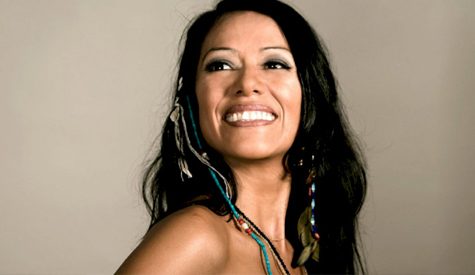
Lila Downs is a name that resonates deeply within the realms of world music, Latin American folklore, and social activism. Born on September 19, 1968, in Tlaxiaco, Oaxaca, Mexico, Lila Downs has become one of the most influential and celebrated artists of her generation. Her music is a rich tapestry woven from the threads of her indigenous Mixtec heritage, her Mexican-American identity, and her profound commitment to social justice. Over the course of her career, Downs has not only achieved critical and commercial success but has also used her platform to amplify the voices of marginalized communities, particularly indigenous peoples and immigrants. This biography delves into the life, career, and accomplishments of Lila Downs, focusing on her Latino heritage and her indelible impact on the music industry.
Lila Downs was born to Anita Sánchez, a Mixtec cabaret singer, and Allen Downs, a Scottish-American professor of art and cinematography. Her parents’ union was unconventional for the time, blending two distinct cultures and traditions. This bicultural upbringing would later become a defining feature of Downs’ music and identity.
Growing up in Tlaxiaco, a small town in the mountainous region of Oaxaca, Downs was immersed in the rich cultural traditions of the Mixtec people. Her mother, Anita, was a significant influence, introducing her to the music, language, and customs of the Mixtec community. At the same time, her father’s artistic sensibilities and love for jazz and classical music exposed her to a broader musical landscape.
However, Downs’ childhood was not without its challenges. Her parents’ relationship was fraught with difficulties, and they eventually separated when she was still young. Downs spent her formative years shuttling between Oaxaca and Minnesota, where her father lived. This dual existence—split between the rural, indigenous world of Oaxaca and the urban, predominantly white environment of Minnesota—shaped her worldview and instilled in her a deep sense of cultural duality.
Lila Downs’ educational journey was as eclectic as her cultural background. She attended the University of Minnesota, where she studied anthropology and vocal performance. Her academic pursuits were deeply influenced by her desire to understand the complexities of human culture, particularly the struggles of indigenous communities in Latin America.
During her time at university, Downs became increasingly aware of the systemic injustices faced by indigenous peoples, both in Mexico and the United States. This awareness would later inform her music and activism. She also began to explore her own identity, grappling with questions of belonging and cultural heritage.
Musically, Downs was drawn to a wide range of genres, from traditional Mexican folk music to jazz, blues, and opera. She was particularly inspired by the works of iconic Latin American artists such as Mercedes Sosa, Violeta Parra, and Chavela Vargas, who used their music as a platform for social and political expression. These influences would later converge in Downs’ own unique musical style, which blends traditional Latin American sounds with contemporary genres.
Lila Downs’ professional music career began in the early 1990s, after she returned to Oaxaca following her father’s death. It was during this period that she began to fully embrace her indigenous roots and incorporate them into her music. She started performing in local venues, often singing in Mixtec, Zapotec, and Spanish, and quickly gained a reputation for her powerful voice and emotive performances.
In 1994, Downs released her debut album, *”Ofrenda”* (Offering), which was a tribute to her indigenous heritage and a reflection on the struggles of the Mixtec people. The album was a critical success and marked the beginning of Downs’ journey as a voice for the marginalized. Her music was not only a celebration of her cultural heritage but also a call to action, addressing issues such as poverty, discrimination, and the erosion of indigenous traditions.
Lila Downs’ breakthrough came with the release of her 1999 album, *”La Sandunga”* (The Elegance). The album was a homage to the traditional music of Oaxaca and featured a mix of original compositions and reinterpretations of classic Mexican songs. *”La Sandunga”* received widespread acclaim and established Downs as a leading figure in the world music scene.
Following the success of *”La Sandunga”*, Downs continued to build on her momentum with a series of critically acclaimed albums, including *”Árbol de la Vida”* (Tree of Life, 2000), *”La Línea”* (The Line, 2001), and *”Una Sangre”* (One Blood, 2004). These albums showcased Downs’ versatility as an artist, blending traditional Latin American rhythms with elements of jazz, blues, and rock. Her music was a reflection of her multicultural identity, seamlessly weaving together the diverse strands of her heritage.
One of the defining moments of Downs’ career came in 2002, when she contributed to the soundtrack of the film *”Frida”*, a biopic about the iconic Mexican artist Frida Kahlo. Downs’ rendition of the song *”Burn It Blue”* earned her an Academy Award nomination for Best Original Song, bringing her music to a global audience. The film’s soundtrack, which also featured contributions from other prominent Latin American artists, was a celebration of Mexican culture and further solidified Downs’ status as a cultural ambassador.
Throughout her career, Lila Downs has been a vocal advocate for social justice, using her music as a platform to address issues such as indigenous rights, immigration, and gender equality. Her commitment to these causes is deeply rooted in her own experiences and the struggles of the communities she represents.
One of the central themes in Downs’ music is the plight of immigrants, particularly those who cross the U.S.-Mexico border in search of a better life. Her 2001 album, *”La Línea”*, is a poignant exploration of the immigrant experience, featuring songs that tell the stories of those who risk everything to reach the United States. The album’s title track, *”La Línea”*, is a powerful ballad that captures the pain and hope of those who leave their homes behind.
Downs has also been a staunch advocate for indigenous rights, using her music to raise awareness about the challenges faced by indigenous communities in Latin America. Her 2004 album, *”Una Sangre”*, is a celebration of indigenous culture and a call to action for the preservation of traditional knowledge and practices. The album features songs in Mixtec, Zapotec, and other indigenous languages, highlighting the richness and diversity of these cultures.
In addition to her music, Downs has been actively involved in various social and political causes. She has worked with organizations such as Amnesty International and the United Nations to promote human rights and social justice. She has also been a vocal supporter of the Zapatista movement in Mexico, which advocates for the rights of indigenous peoples and rural communities.
Lila Downs’ music is a reflection of her multicultural identity and her deep connection to her indigenous roots. Her sound is a fusion of traditional Latin American genres such as ranchera, bolero, and son jarocho, with elements of jazz, blues, and world music. This eclectic mix of styles has earned her a unique place in the music industry, transcending genre boundaries and appealing to a diverse audience.
One of the hallmarks of Downs’ music is her use of indigenous languages. She frequently sings in Mixtec, Zapotec, and other native languages, preserving and promoting these linguistic traditions. This commitment to linguistic diversity is a testament to her dedication to her heritage and her belief in the importance of cultural preservation.
Downs’ lyrics are often deeply poetic and imbued with social and political commentary. She draws inspiration from the works of Latin American poets and writers, as well as from the oral traditions of indigenous communities. Her songs are a blend of personal reflection and collective memory, addressing universal themes such as love, loss, and resilience, while also shedding light on the specific struggles of marginalized communities.
Throughout her career, Lila Downs has collaborated with a wide range of artists from different genres and cultural backgrounds. These collaborations have not only enriched her music but have also helped to bridge cultural divides and foster a greater understanding of Latin American culture.
One of her most notable collaborations was with the legendary Mexican-American guitarist and composer Carlos Santana. Downs contributed vocals to Santana’s 2002 album, *”Shaman”*, which featured a diverse array of artists from around the world. The album was a commercial success and further elevated Downs’ profile on the international stage.
Downs has also worked with other prominent Latin American artists, such as the Argentine singer Mercedes Sosa and the Colombian rocker Juanes. These collaborations have allowed her to explore new musical territories and reach new audiences, while also strengthening the bonds between different Latin American musical traditions.
In addition to her work with other artists, Downs has been involved in various cross-cultural projects that aim to promote cultural exchange and understanding. She has participated in festivals and events that celebrate the diversity of Latin American music, and she has been a vocal advocate for the inclusion of indigenous voices in the global music industry.
Lila Downs’ contributions to the music industry and her advocacy for social justice have earned her numerous awards and accolades. She has received multiple Latin Grammy Awards, including Best Folk Album for *”Pecados y Milagros”* (Sins and Miracles, 2011) and Best Regional Mexican Music Album for *”Balas y Chocolate”* (Bullets and Chocolate, 2015). These awards are a testament to her talent and her ability to connect with audiences across cultural and linguistic boundaries.
In addition to her Latin Grammy Awards, Downs has been recognized by various international organizations for her work in promoting cultural diversity and social justice. She has received the Ohtli Award from the Mexican government, which honors individuals who have made significant contributions to the Mexican community abroad. She has also been awarded the Order of the Aztec Eagle, one of Mexico’s highest honors, for her efforts to promote Mexican culture and heritage.
Downs’ music has also been featured in numerous films and television shows, further expanding her reach and influence. Her songs have appeared in films such as *”Tortilla Soup”* (2001) and *”The Three Burials of Melquiades Estrada”* (2005), as well as in popular television series like *”Breaking Bad”* and *”Narcos”*. These appearances have introduced her music to new audiences and have helped to cement her status as a cultural icon.
Despite her fame and success, Lila Downs has remained deeply connected to her roots and committed to her principles. She continues to live in Oaxaca, where she is actively involved in the local community and works to support indigenous artists and cultural initiatives. She is also a devoted mother, balancing her career with her responsibilities as a parent.
Downs’ legacy is one of cultural preservation, social activism, and artistic excellence. She has used her music to give voice to the voiceless, to celebrate the richness of Latin American culture, and to challenge the injustices that persist in our world. Her work has inspired countless artists and activists, and her influence can be seen in the growing recognition of indigenous and Latin American music on the global stage.
As she continues to create and perform, Lila Downs remains a beacon of hope and resilience, a testament to the power of music to transcend borders and bring people together. Her journey is a reminder of the importance of staying true to one’s roots, of using one’s talents to make a difference, and of the enduring strength of the human spirit.
Lila Downs is more than just a musician; she is a cultural icon, a social activist, and a voice for the marginalized. Her music is a celebration of her Latino heritage, a fusion of traditional and contemporary sounds that reflects the complexities of her identity. Through her art, she has brought attention to the struggles of indigenous communities, immigrants, and other marginalized groups, using her platform to advocate for social justice and cultural preservation.
Throughout her career, Downs has achieved remarkable success, earning critical acclaim, numerous awards, and a devoted global following. Yet, despite her fame, she has remained grounded and committed to her principles, using her music to inspire and uplift others.
As we look to the future, Lila Downs’ legacy serves as a reminder of the power of music to transcend boundaries, to bridge cultural divides, and to bring about positive change in the world. Her voice, both literal and metaphorical, continues to resonate, a testament to the enduring strength and beauty of Latin American culture.